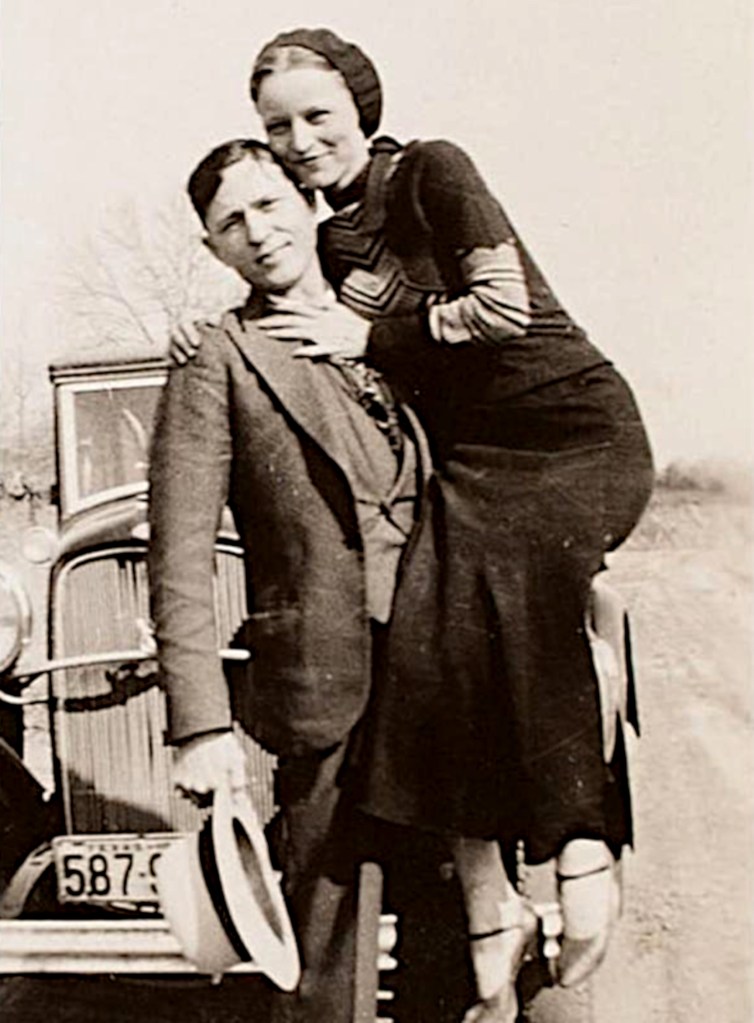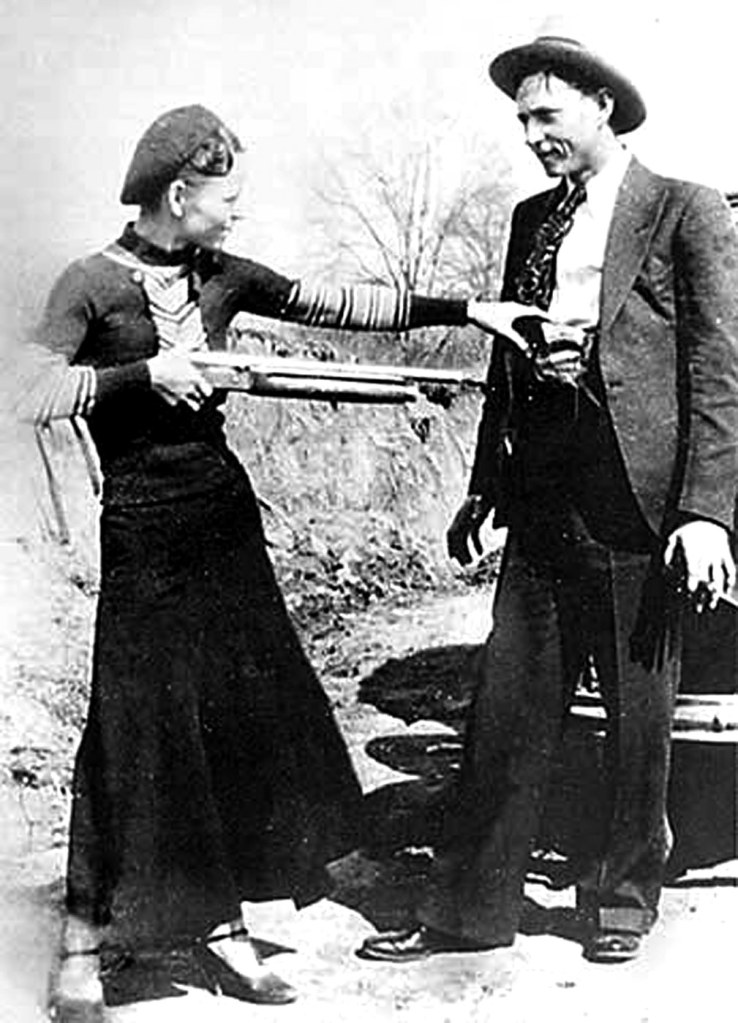
Outlaws Bonnie and Clyde Ambushed 92 Years Ago Today

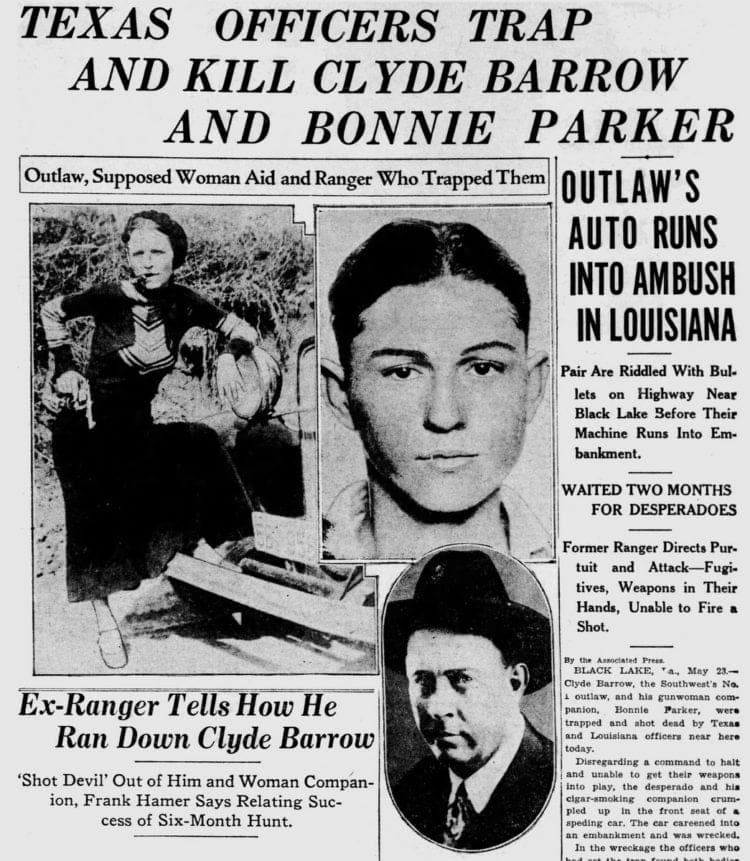
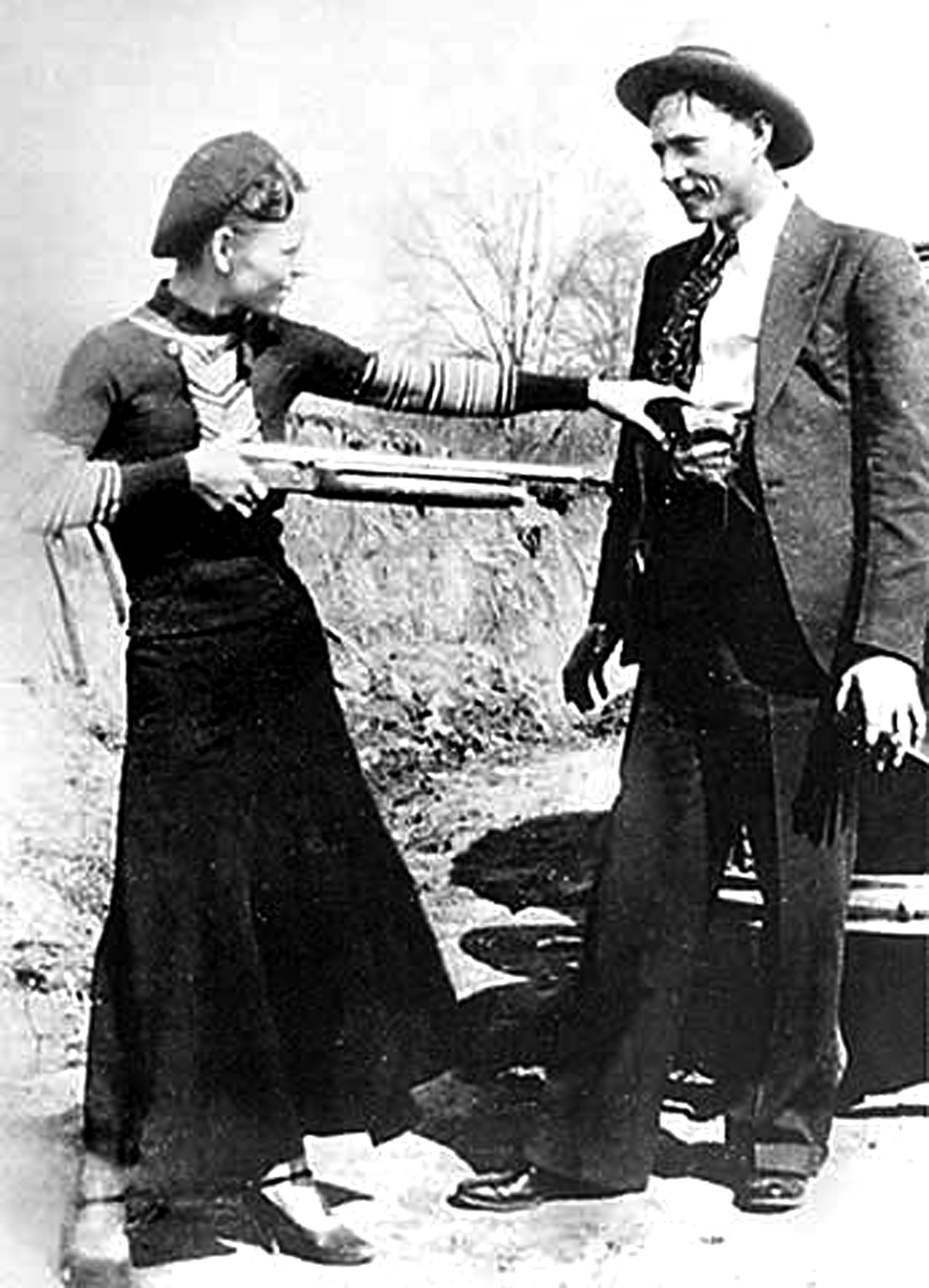
Modern-day desperados, Bonnie Parker and Clyde Barrow, were shot to death in an ambush on a back road of Louisiana, 92 years ago today, May 23, 1934.

Bonnie and Clyde had been on the run from lawmen for a couple of years, dashing from one bank to another across middle America. They had killed several highway patrolmen and civilians from Texas to Missouri and elsewhere. 

Lawmen everywhere tried to track them down to stop their violent crime spree.  As they high-tailed it from one murder to another, they also committed robberies and kidnappings, gaining widespread attention in newspapers and were portrayed as public enemies in a romanticized depression-era America of the early 1930s. 

A posse of six officers had tracked them to West Louisiana and hid in ambush just outside of Gibsland, Louisiana, just eight and a half miles from my dad’s hometown of Arcadia, Louisiana. The law officers:

• Frank Hamer: Former Texas Ranger captain who led the posse and tracked the Barrow gang.

• Henderson Jordan: Sheriff of Bienville Parish, Louisiana, who had local jurisdiction and orchestrated the trap.

• Prentiss Oakley: Deputy to Sheriff Jordan who fired the first shot in the ambush.

• Ted Hinton: Dallas County Deputy Sheriff who personally knew the outlaws and wielded an automatic rifle.

• Bob Alcorn: Dallas County Deputy Sheriff who accompanied Hinton.

• Maney Gault: Former Texas Ranger and Hamer’s hand-picked partner for the manhunt.

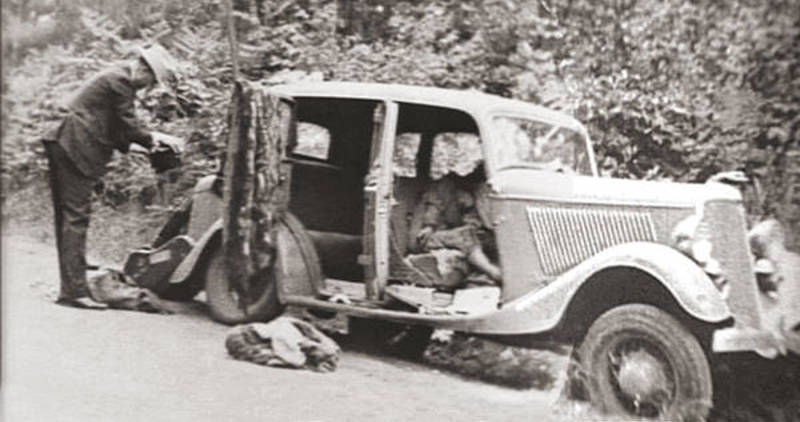
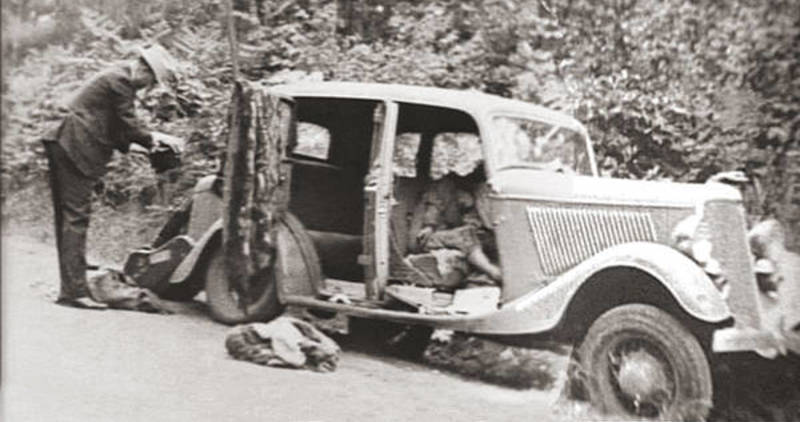
The pair of outlaws were finally ambushed near where my dad grew up in Bienville Parish (County), Louisiana. Dad had just turned 20 years old the previous day. My uncle, Ernest Murphy, and his brother, King Murphy, raced to the nearby death scene and shot photos of Bonnie and Clyde, still inside their stolen 1934 Model 40 B Ford Deluxe sedan (often just called a Ford V8) It was famously riddled with well more than 100 bullets by the law enforcement posse. The high-speed, powerful flathead V8 was Clyde’s favorite getaway car.

My wife and I visited the scene of the ambush years later on November 5, 2011. There in Gibsland, Louisiana, we visited the Bonnie and Clyde Museum, and talked at length to Linton J. “Boots” Hinton, the son of one of the lawmen who killed Bonnie and Clyde that early pre-dawn Wednesday and curator of his local museum. 

According to “Boots” Hinton, the six lawmen were hiding on each side of Louisiana Highway 154 and had set up a ruse to stop the outlaws for their ambush. Boots Hinton ran the museum and regaled us with stories from his dad, Deputy Ted Hinton, one of the lawmen who finally brought Bonnie and Clyde down.

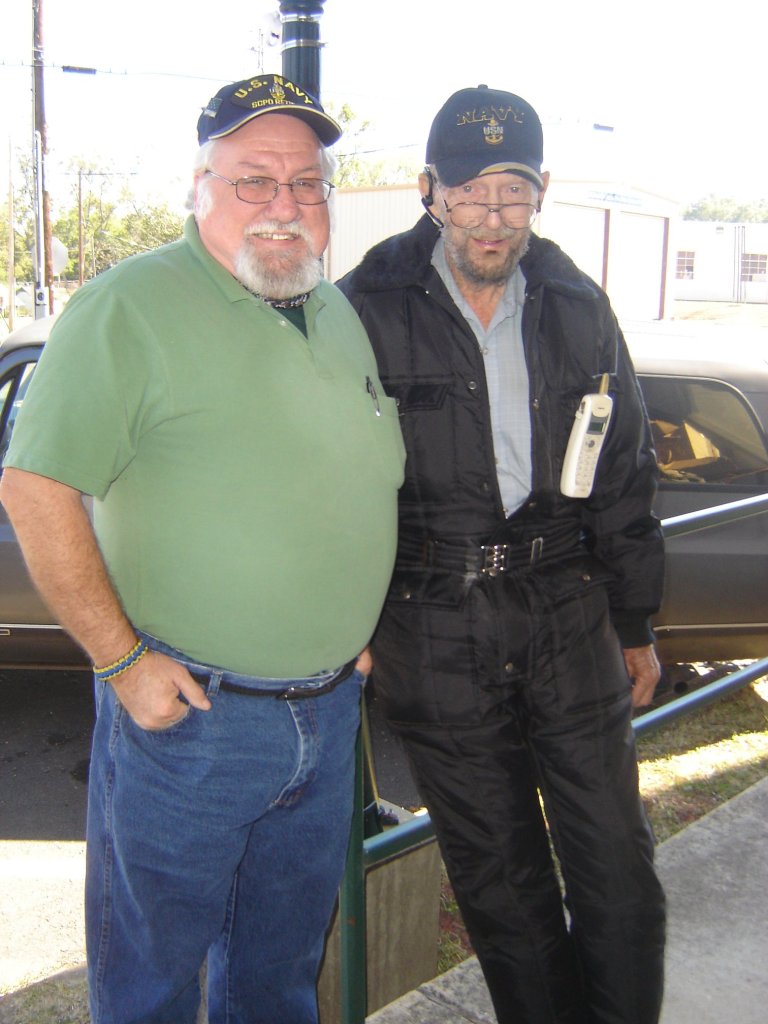
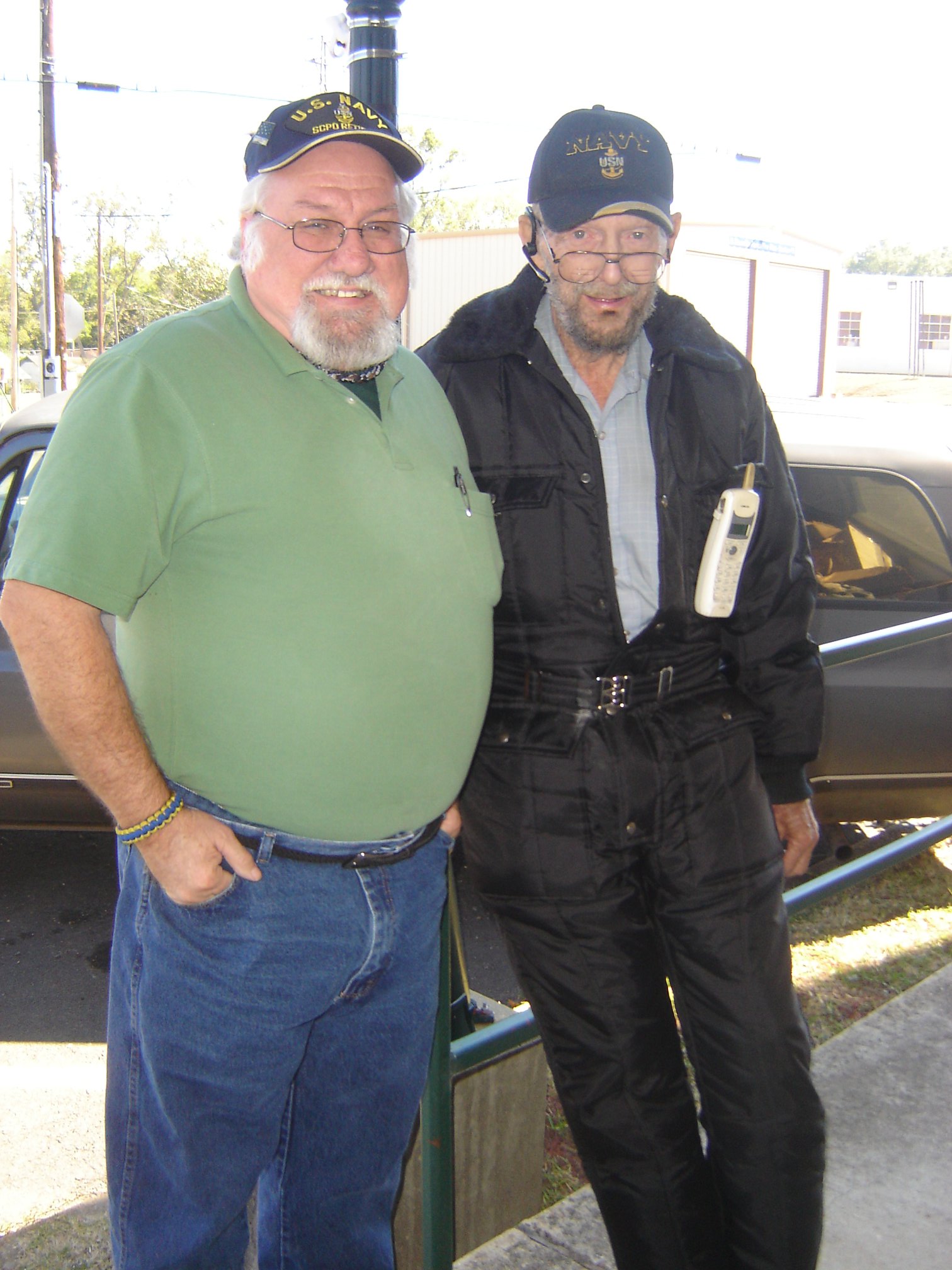
Boots had written a book entitled “AMBUSH,” about the end of Bonnie and Clyde and sold it at the Museum. Boots posed for a photo with me that afternoon (see photo of Boots and me above in front of the Museum. He would not allow any cameras inside the Museum, but he autographed my book for me.)  Boots was just four months old when Bonnie and Clyde were shot by his dad and the posse. Boots Hinton died five years after our visit, in the birthplace of my dad, nearby Arcadia, Louisiana. Boots was 82 years old when he died on December 5, 2016.

Rest in Peace, Linton J. “Boots” Hinton, and thanks for all of the stories.


Bonnie and Clyde Ambushed in Louisiana 88 Years Ago Today

by HB Auld, Jr.

Today is the 88th anniversary of the ambush of Bonnie Parker and Clyde Barrow, notorious infamous outlaws who died on a lonely Louisiana two-lane road May 23, 1934.

Bonnie and Clyde were nationally known criminals who were wanted for kidnapping, auto theft, bank robbery, and the murder of 11 people, including nine law enforcement officers during their two-year crime spree. They were finally killed in an ambush on Louisiana Highway 154, outside of Gibsland, LA, near Arcadia, LA.

Six law enforcement officers from three agencies combined to ensure the pair were killed. After the killing outside of Gibsland, the pair were taken to Arcadia and laid out in the Conger Furniture Store and Funeral Home, located directly beside my grandfather’s dry cleaning shop. My father, HB Auld, had turned 20 years old the day before the shooting and still lived and worked in Arcadia when Bonnie and Clyde were brought in. My dad was born and raised in Arcadia and worked for his dad in the dry cleaning shop at the time Bonnie and Clyde were killed and brought there.

The 2000-person population grew to more than 12,000.

The 2,000-person population of Arcadia swelled to more than 12,000 onlookers who arrived by foot, car, buggy, and on horseback within hours of the deaths of Bonnie and Clyde.

I met the son of one of the law enforcement officers, Boots Hinton, in Gibsland November 5, 2005, during a visit back to Arcadia. Boots ran the Bonnie and Clyde Ambush Museum in Gibsland, located in the old cafe where the pair bought a couple of sandwiches before heading down Highway 154 for their dates with death: May 23, 1934, 88 years ago today.


Bonnie and Clyde Die in Ambush 87 Years Ago Today

by HB Auld, Jr.

Today is the 87th anniversary of the deaths of Bonnie and Clyde. They were ambushed outside of Gibsland, LA, on May 23, 1934.

The criminal pair had cut a swath of murder and robbery across the United States during the past 21 months. For much of their murder spree, they were accompanied by Clyde Barrow’s brother, Buck Barrow, and his third wife, Blanche.

Bonnie Parker and Clyde Barrow had stopped in at a cafe in Gibsland for a sandwich and were on their way down Highway 54, one of the backroads of Louisiana, when they were lured into stopping by the father of one of their former cohorts, Henry Methvin. When they stopped to help Methvin with his broken-down pickup, six lawmen from Texas and Louisiana stood up and opened fire on their 1934 Ford V8, killing the duo with more than 150 shots.

The dead criminals were taken to nearby Arcadia, LA, laid out on tables in a furniture store, and later buried in separate locations back in Texas: Bonnie Parker was buried in the Fishtrap Cemetery, although she was moved in 1945 to the new Crown Hill Cemetery in Dallas. Clyde Barrow was buried in Western Heights Cemetery in Dallas, next to his brother Marvin. His epitaph reads: “Gone but not forgotten.”

Their final setting outside Gibsland, LA, was near Arcadia, LA, where my dad was born and raised. My dad, HB Auld, had celebrated his 20th birthday in Arcadia, the day before the ambush.

When word quickly reached Arcadia, my paternal uncle, Ernest Murphy, and his brother, King Murphy, rushed to the “death car” and King began taking black and white photos. Ernest ran the film back to Arcadia for processing, and then returned time and again to the ambush site for more film to run in to Arcadia.

When Bonnie and Clyde were taken to Arcadia, they were “laid out” on tables in Conger Furniture Co. , next door to my grandfather’s dry cleaning shop.

…black, three-ring binder (of photos)….

For years, my dad had a black, three-ring binder full of 8×10 black and white photos of the ambush site, the death car, and Bonnie and Clyde in the car and on the tables in Conger Furniture Co. Then, while I was in the Navy, the binder suddenly disappeared. No one knows what happened to it. I believe the photo of the “death car” at the ambush site with Bonnie and Clyde still in it above may well have been one of the ones King Murphy and Ernest Murphy took that day.

For my birthday on November 5, 2011, my wife, Jannie, and I visited Gibsland, LA, where “Boots” Hinton, son of Deputy Ted Hinton who was one of those who ambushed Bonnie and Clyde, told us the story of the ambush after they stopped for sandwiches there. We visited the Bonnie and Clyde Museum there that Boots managed and purchased his book, “Ambush,” which Boots autographed and inscribed for me. When he died, five years later at age 81, I attached his obituary inside the book, also. I still have Boots’ book and cherish my meeting with him.

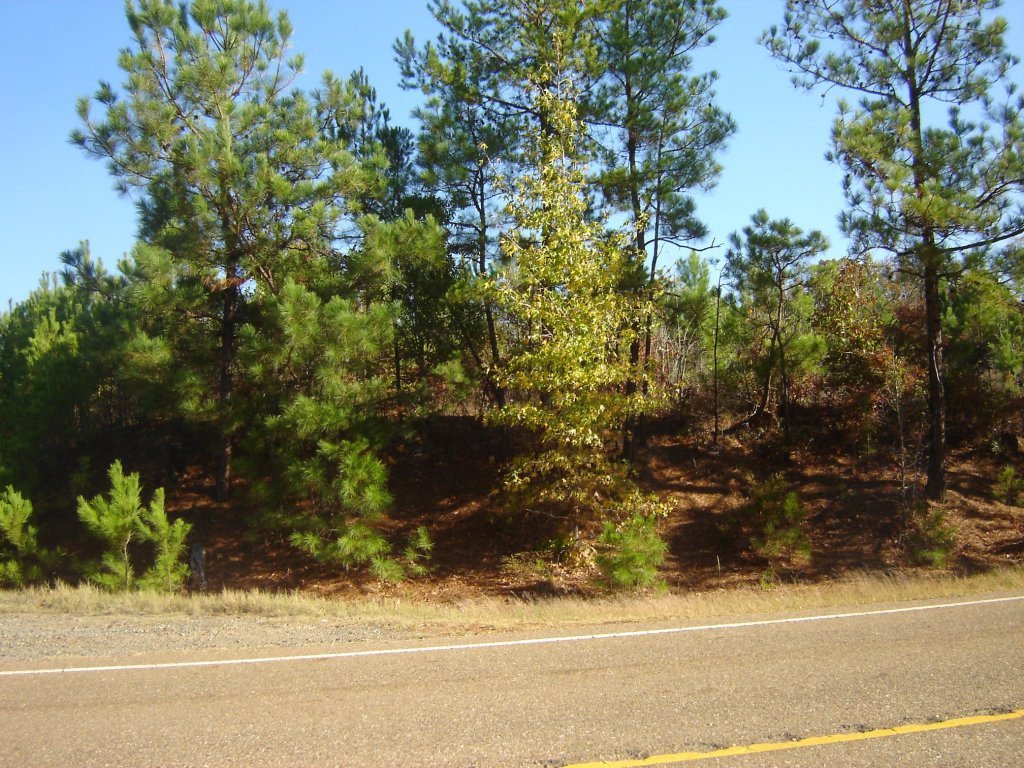
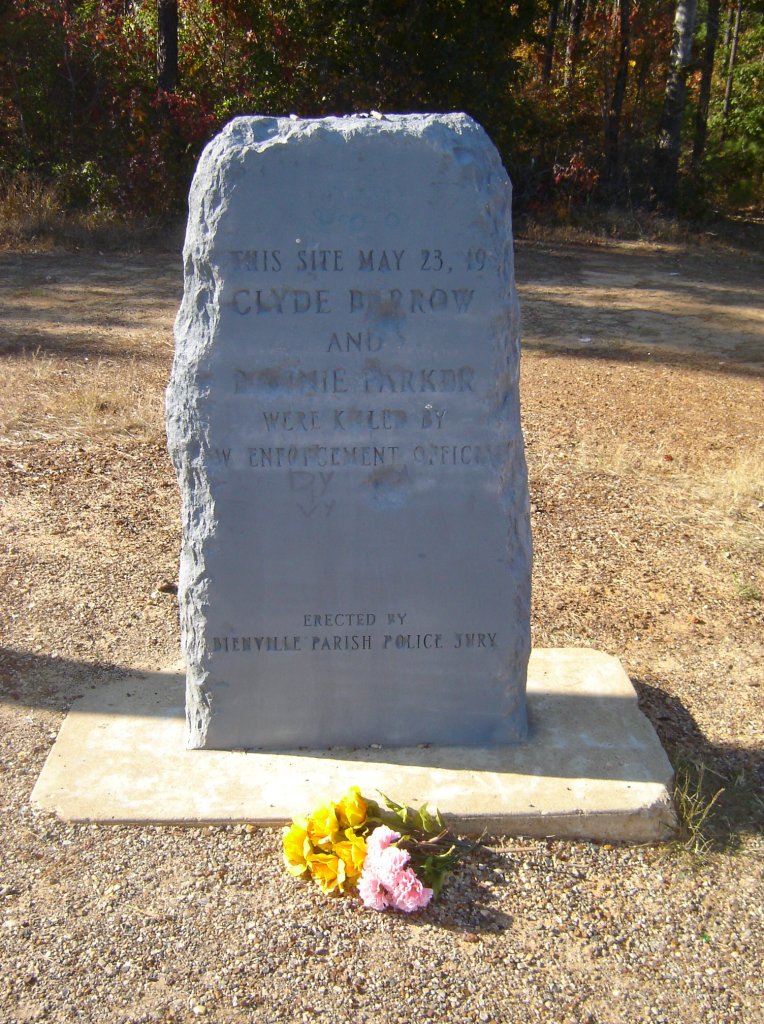
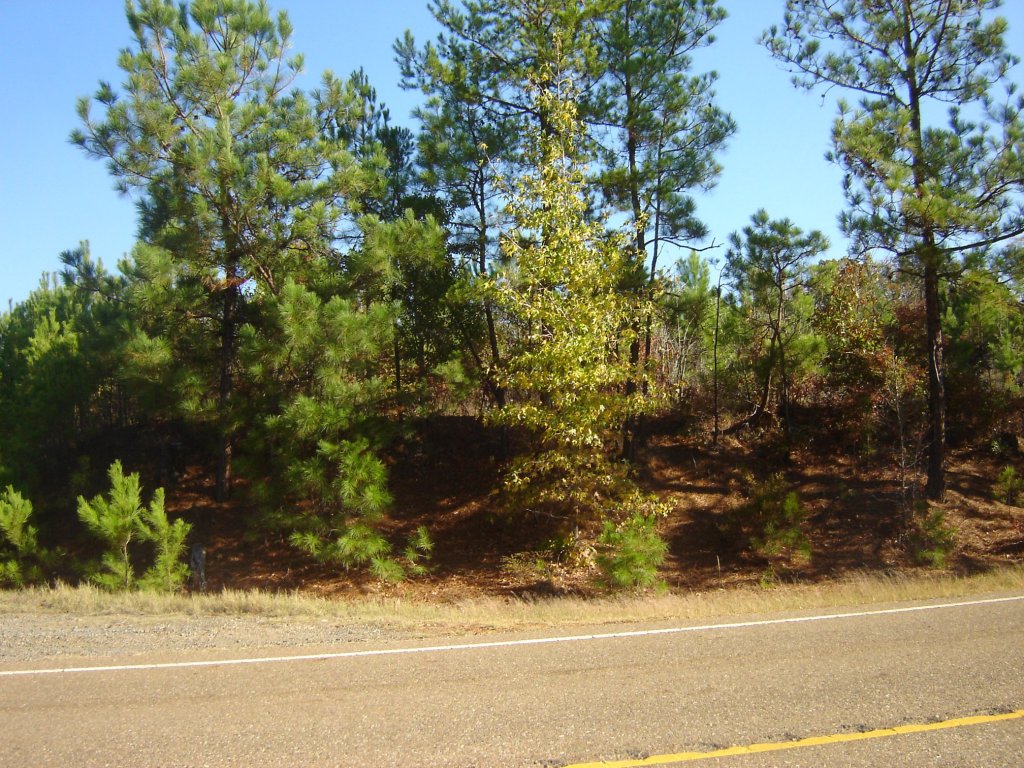
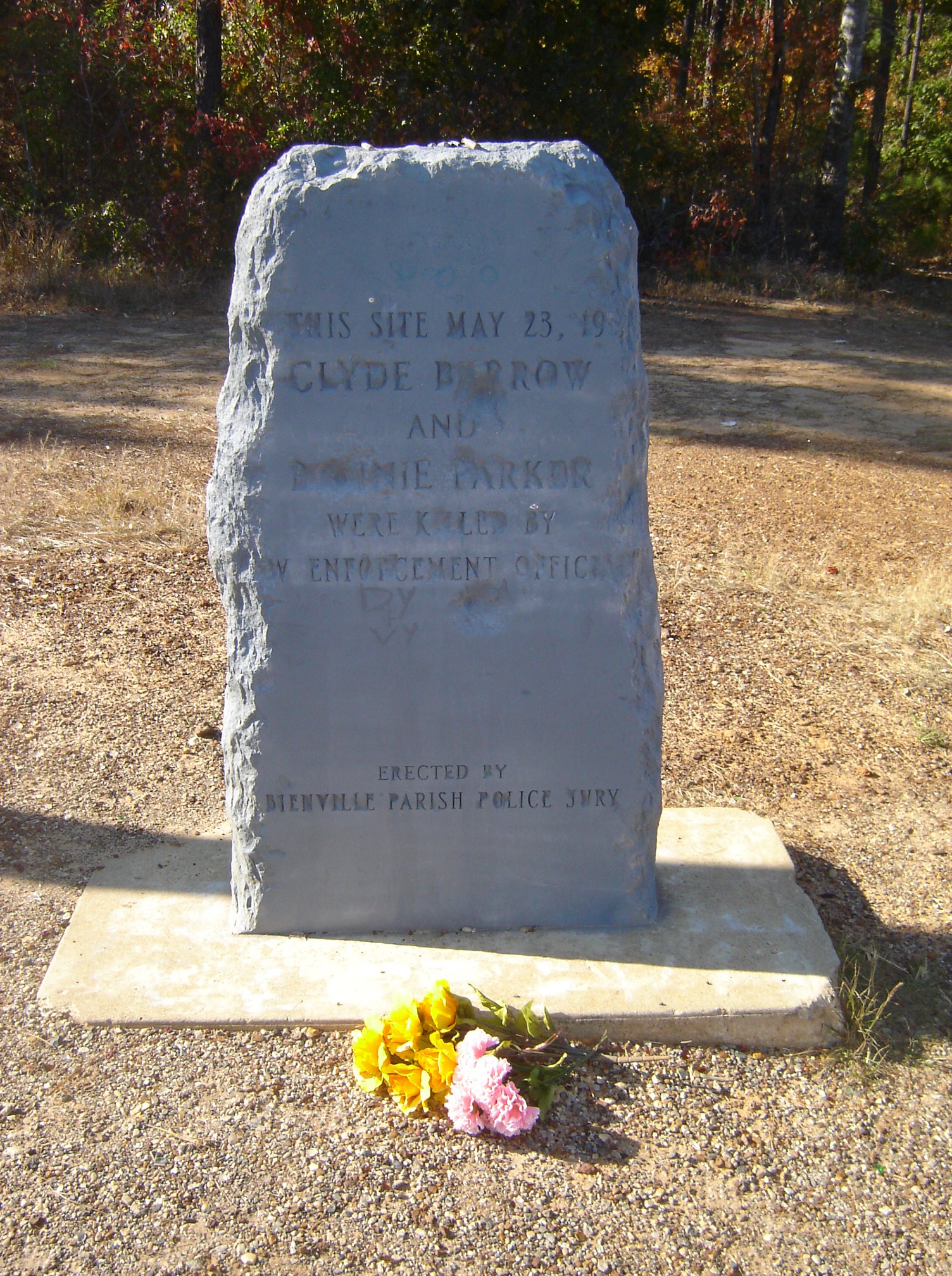
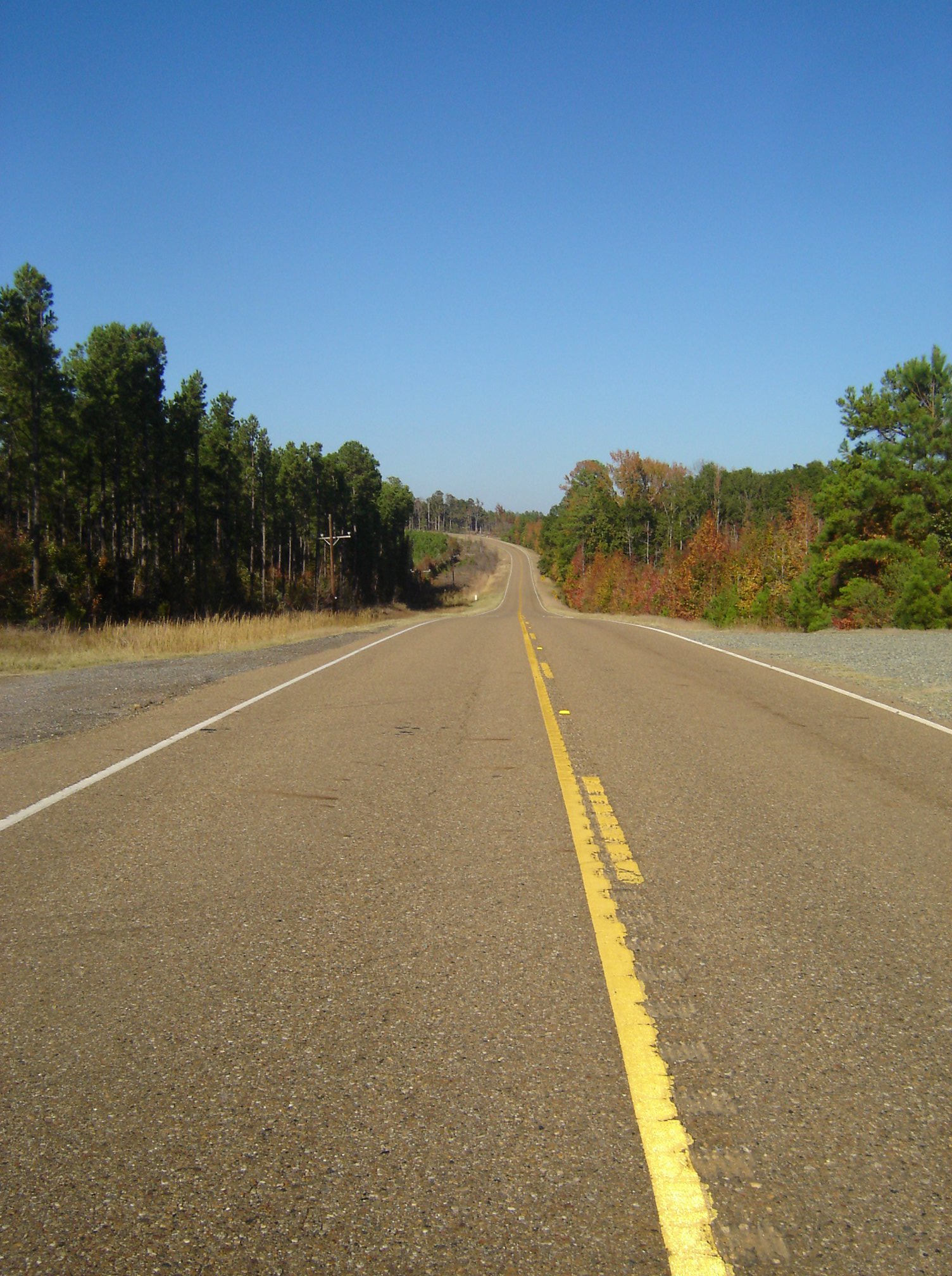
From there, we drove down Highway 54, a paved two-lane now, but a narrow gravel road on May 23, 1934, when the crime duo traveled down it to their deaths. There, I took the photos above of the ambush site, the highway, and the monument.