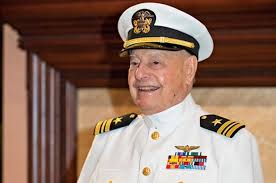
Last Remaining Survivor of Sinking of the USS ARIZONA Dies at Age 102

by H. B. Auld, Jr.

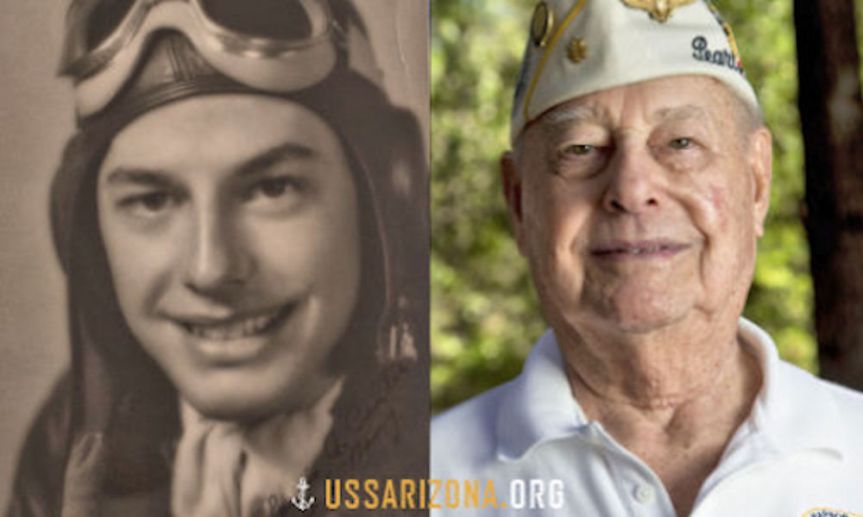
The United States lost a true American hero yesterday, April 1, 2024. US Navy Lieutenant Commander Louis Anthony Conter (USN, Retired), the last remaining survivor of the sinking of the USS ARIZONA (BB 39) on December 7, 1941, died at the age of 102.

LCDR Conter joined the US Navy November 15, 1939. He completed Basic Training at Naval Training Station, San Diego, CA, and reported to the USS ARIZONA in January, 1940, as a Quartermaster Third Class.

The ARIZONA returned from patrol to Pearl Harbor, HI, on December 6, 1941, the day before the Japanese assault on the naval base the next morning.  On the day of the attack, Quartermaster Conter was on watch on the quarterdeck at 8 a.m.  The ship was struck by a 1,760-pound bomb and then a second bomb which raised the ship out of the water and blew the bow off of the ship.

Conter began aiding his wounded Shipmates when the order to abandon ship came from the ship’s captain.  Conter took to one of the lifeboats and began pulling injured men into his lifeboat before rowing to shore.  He later spent weeks recovering the bodies of the dead.  The ARIZONA sank in just nine minutes.  Almost 1200 of her crew died in the explosions and sinking.  Only 334 men from the ARIZONA survived the attack. 

After the attack, which President Franklin Delano Roosevelt rightly called, “…a date which will live in infamy….” Conter was selected for flight training.  He received his Naval Aviator wings as an enlisted Naval Aviation Pilot in November, 1942. 

He was shot down twice over the Pacific Ocean during his flight career, but managed to row ashore both times in a raft.   Later after being commissioned as a naval Ensign, he served in the New Guinea campaign and in Europe.  He transferred to the Naval Reserve following World War II, but later returned to active duty to serve during the Korean War and the Vietnam Conflict.  He retired as a Navy Lieutenant Commander in December, 1967. 

In civilian life, LCDR Conter co-authored his autobiography, From USS ARIZONA Survivor to Unsung American Hero, The Lou Conter Story, with Annette C. Hull and Warren R. Hull.

LCDR Conter became the last known survivor of the sinking of the USS ARIZONA in April, 2023, when Ken Potts, the other remaining survivor, died. The final survivor of the sinking of the USS ARIZONA, Navy LCDR Louis Anthony Conter, passed away at 102 on April 1, 2024, in Grass Valley, CA.


Space Shuttle Challenger Explodes 38 Years Ago on January 28, 1986

From The History Channel’s “This Day In History

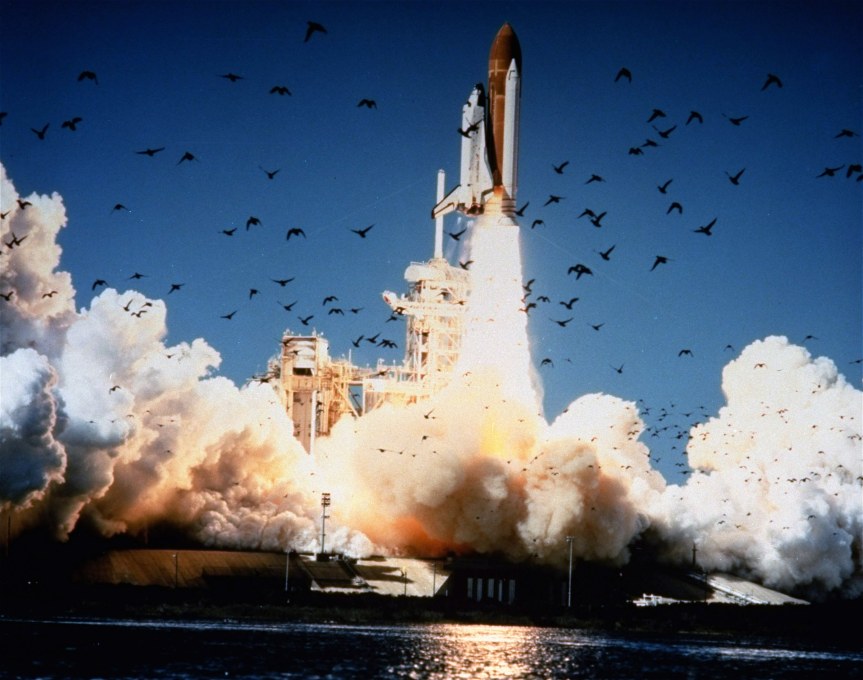
At 11:38 a.m. EST, on January 28, 1986, the space shuttle Challenger lifts off from Cape Canaveral, Florida, and Christa McAuliffe is on her way to becoming the first ordinary U.S. civilian to travel into space. McAuliffe, a 37-year-old high school social studies teacher from New Hampshire, won a competition that earned her a place among the seven-member crew of the Challenger. She underwent months of shuttle training but then, beginning January 23, was forced to wait six long days as the Challenger‘s launch countdown was repeatedly delayed because of weather and technical problems. Finally, on January 28, the shuttle lifted off.

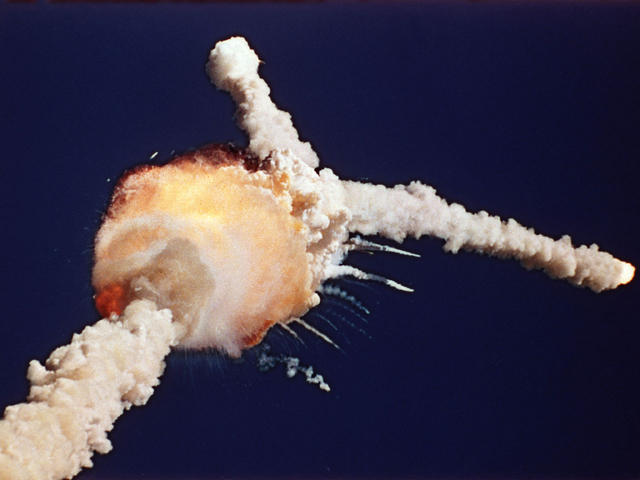
Seventy-three seconds later, hundreds on the ground, including Christa’s family, stared in disbelief as the shuttle broke up in a forking plume of smoke and fire. Millions more watched the wrenching tragedy unfold on live television. There were no survivors.

In 1976, the National Aeronautics and Space Administration (NASA) unveiled the world’s first reusable manned spacecraft, the Enterprise. Five years later, space flights of the shuttle began when Columbia traveled into space on a 54-hour mission. Launched by two solid-rocket boosters and an external tank, only the aircraft-like shuttle entered into orbit around Earth. When the mission was completed, the shuttle fired engines to reduce speed and, after descending through the atmosphere, landed like a glider. Early shuttles took satellite equipment into space and carried out various scientific experiments. The Challenger disaster was the first major shuttle accident.

Special Commission appointed….

In the aftermath of the disaster, President Ronald Reagan appointed a special commission to determine what went wrong with Challenger and to develop future corrective measures. The presidential commission was headed by former secretary of state William Rogers, and included former astronaut Neil Armstrong and former test pilot Chuck Yeager. The investigation determined that the disaster was caused by the failure of an “O-ring” seal in one of the two solid-fuel rockets. The elastic O-ring did not respond as expected because of the cold temperature at launch time, which began a chain of events that resulted in the massive loss. As a result, NASA did not send astronauts into space for more than two years as it redesigned a number of features of the space shuttle.

In September 1988, space shuttle flights resumed with the successful launching of the Discovery. Since then, the space shuttle has carried out numerous important missions, such as the repair and maintenance of the Hubble Space Telescope and the construction of the International Space Station.

On February 1, 2003, a second space-shuttle disaster rocked the United States when Columbia disintegrated upon reentry of the Earth’s atmosphere. All aboard were killed. Despite fears that the problems that downed Columbia had not been satisfactorily addressed, space-shuttle flights resumed on July 26, 2005, when Discovery was again put into orbit.

The Space Shuttle program formally ended on August 31, 2011 after its final mission, STS-135 flown by Atlantis, in July 2011.


First Nuclear-Powered Sub Launched 70 Years Ago Today

by H.B. Auld, Jr.

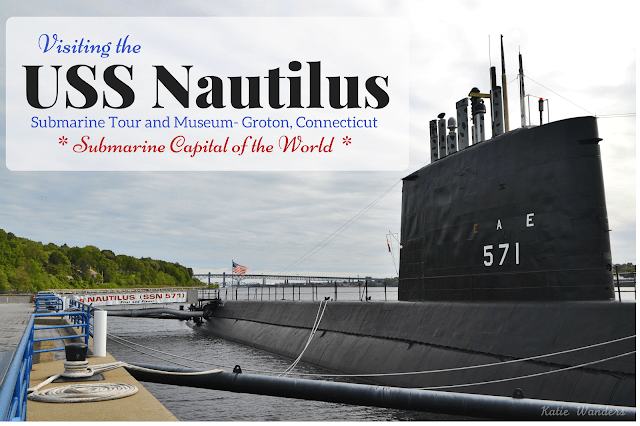
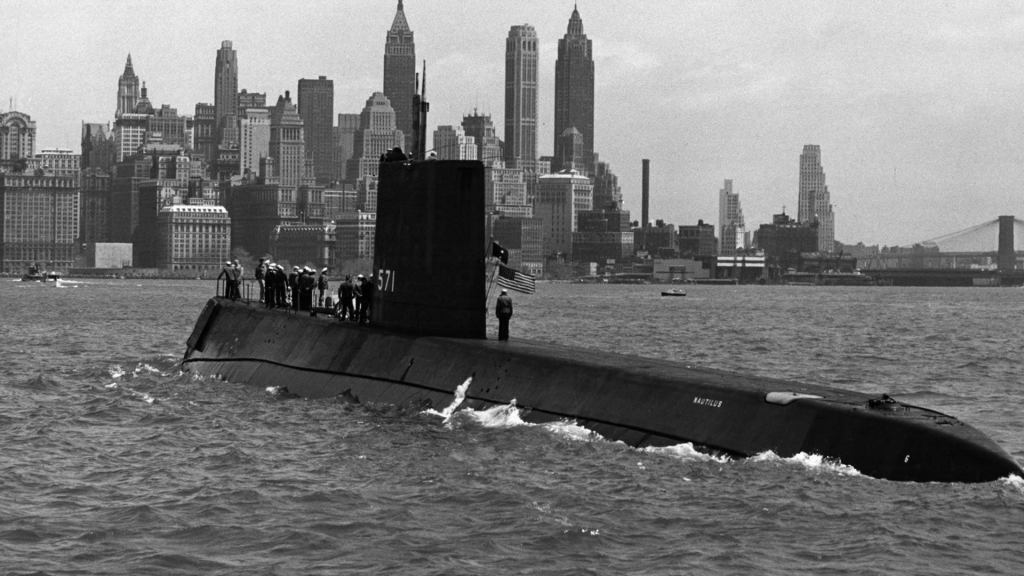
The USS NAUTILUS (SSN 571) was launched 70 years ago today:  January 21, 1954.  Thus opened the beginning of the era of nuclear-powered sea vessels for the US Navy that stands today.

The NAUTILUS was launched from Groton, CT, where it was built and christened.  It was commissioned the following September.  During its 26-year career, it set records, made history, and sailed on sea-going missions only dreamed of before.   The project to plan and build a nuclear propulsion power plant for a submarine was led by then-Captain Hyman G. Rickover, often called the “Father of the Nuclear Navy.”  From then until later-Admiral Rickover retired, not a single naval officer entered the Nuclear Navy serving ashore, afloat, or in the Submarine Service without the express permission and approval of Admiral Rickover.  Naval officers withstood a brutal interview process where one wrong misstep or word could eliminate them from nuclear consideration.  Many young Ensigns who withstood and passed Admiral Rickover’s withering interview later went on to serve as four-star admirals themselves, some of them as the US Navy Chief of Operations.

…examples of the legendary application process….

The following stories are examples of the legendary application process to become a nuclear officer under Admiral Rickover. Real or apocryphal, they illustrate the difficulty in becoming a US Navy nuclear officer under Admiral Hyman G. Rickover:

               ONE:  Admiral Rickover invited a group of Ensigns to breakfast in his stateroom one morning.  During breakfast, he observed one Ensign salting his eggs.  He asked, “Ensign, how did you know those eggs needed salting?”   “Sir,” the Ensign answered, “I assumed they needed salt; all eggs need seasoning.”  “Ensign,” Admiral Rickover replied, “You are dismissed.  I want no officer working for me who assumes anything.”  With that, the Ensign immediately returned to the surface fleet.

               TWO:  Admiral Rickover, during an especially tough interview, asked an Ensign: “Son, I won’t have an officer working for me who loses his temper.  I want you to make me mad. Go on, do it.”  The Ensign walked over to a beautifully detailed wooden model of the USS CONSTITUTION sailing ship.  He picked it up, admired it, then dashed it into hundreds of pieces on the floor at Admiral Rickover’s feet.  The Admiral quietly stared daggers through the Ensign for several minutes while he pushed his own temper back down.  When he knew he was composed, he quietly told the Ensign.  “You passed.  Now get out of my office!”

               THREE:  Admiral Rickover always kept a jar of hard candy on his desk.  Whenever an interviewee would enter, Admiral Rickover would always genially offer the Ensign a piece of candy.  Later, at the end of the interview, Admiral Rickover would again offer the same Ensign another piece of candy before his departure.  It did not matter if the Ensign took a piece of candy or not.  The admiral wanted to see if the Ensign would change his mind and take or refuse candy he had already taken or refused at the beginning of the interview.  He wanted no Sailors in the nuclear program who would be indecisive and change their minds.

The latest nuclear-powered submarine is the Fast Attack Virginia-class submarine USS HYMAN G. RICKOVER (SSN 795), commissioned October 14, 2023. 


Pearl Harbor Ambushed in Sunday Morning Attack 82 Years Ago Today

by HB Auld, Jr. (reprinted from this Weblog earlier)

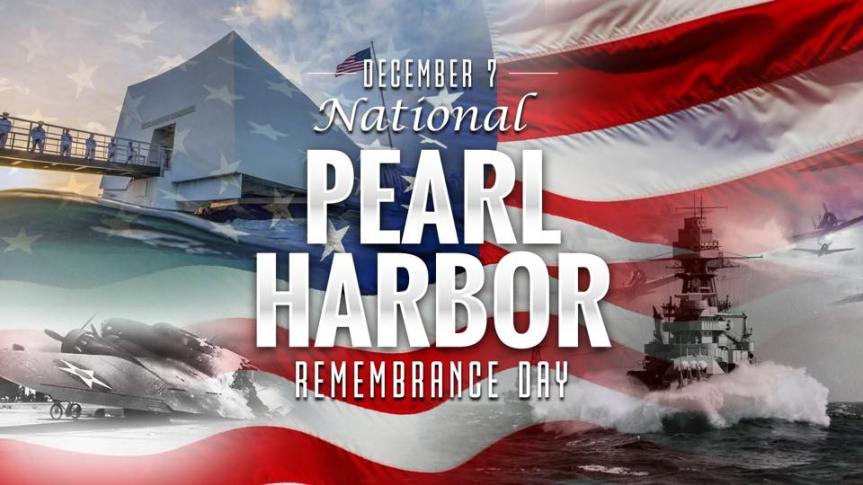
Eighty-two years ago today on December 7, 1941, Imperial Japan attacked the neutral United States with a surprise Sunday morning ambush on naval bases at Pearl Harbor, HI.

During the unprovoked assault on the United States, aircraft from the Imperial Japanese Navy Air Service killed 2,403 US citizens and injured 1,178 others. It also sank four battleships and damaged four others, damaged three cruisers, three destroyers, and one minelayer. Additionally, 188 aircraft were destroyed and another 159 planes were damaged.

“…a date which will live in infamy….”

President Franklin Delano Roosevelt

The following day, US President Franklin Delano Roosevelt appeared before Congress and, declaring the previous day “…a date which will live forever in infamy…,” requested that Congress declare war against Japan. Congress quickly complied and the United States entered World War II hostilities against Japan.

My own father, HB Auld, Sr., was already serving in the US Army when Japan attacked Pearl Harbor and spent the remainder of his military service fighting the Japanese on the island of New Guinea.

My father-in-law, JB Kattes, enlisted in the US Army on December 11, 1941, four days after the surprise attack, and served in the US Army in Washington, Alaska, and Georgia until the end of the War.

God bless all of the men and women who served and all of those who gave their lives in Pearl Harbor and elsewhere in the War.

ALWAYS REMEMBER: THAT DAY IN DECEMBER: God bless America!