USS INDIANAPOLIS Sunk 78 Years Ago; Only One Survivor Remains

by H B Auld, Jr.

Two USS Navy ship disaster anniversaries in two days:

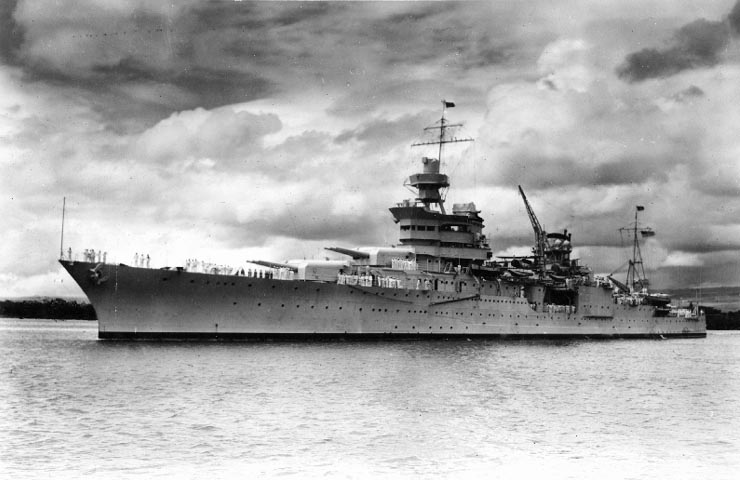
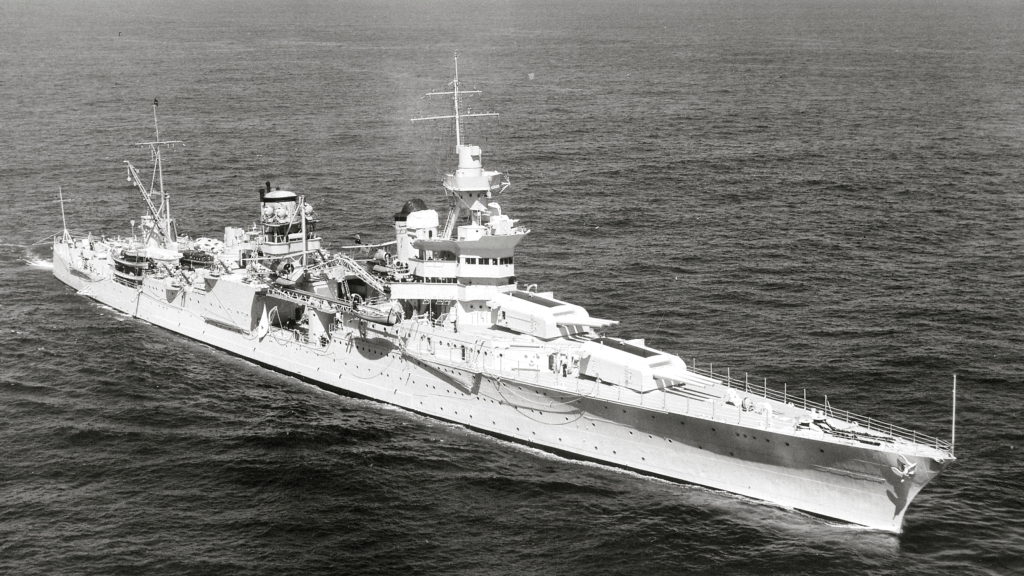
Yesterday it was the USS FORRESTAL (CV 59) and today it is the heavy cruiser USS INDIANAPOLIS (CA 35). I knew this one was coming; it’s been on my calendar all year.

On this day 78 years ago, July 30, 1945, USS INDIANAPOLIS is sunk by Japanese torpedoes. The few survivors would float in the ocean for days before they were found.

Of the nearly 1,200 men on board the ship, about 900 men survived the initial explosion and went overboard into the water. The ship sank 12 minutes later, taking 300 to their watery graves. Almost 600 Sailors died in the water of dehydration, saltwater poisoning, and the worst of all: shark attacks while stranded in the open ocean with few lifeboats and almost no food or water. Those surviving in the water would not be rescued for days. The Navy only learned of the sinking four days later, when survivors were spotted by the crew of a PV-1 Ventura on routine patrol. Of the 1200 original crew, only 316 Sailors survived the tragedy.

There was just one silver lining, if there was one, to the tragedy. INDIANAPOLIS had already performed the most critical part of its mission: It had successfully carried parts for the “Little Boy” atomic bomb across the Pacific before it was sunk. American bombers would soon carry “Little Boy” toward Hiroshima. Along with the bomb “Fat Man” dropped on Nagasaki, “Little Boy” would ultimately force an end to World War II.

My former landlord was one of those 316 survivors….

Several years ago, my landlord was one of those 316 INDIANAPOLIS survivors. During World War II, Lieutenant (Junior Grade) Charles McKissick served in INDIANAPOLIS and survived the sinking. He and I used to sit and talk in McKinney, TX, about our times in the Navy and he would talk about the hellish days and nights he spent in the water after the sinking before being rescued. Every year, Charles would travel to Indianapolis, IN, each July 30 for the ship’s reunion. When he returned, he would tell me that many more of his shipmates were missing that year. The numbers continued to dwindle down at each annual reunion after that. This was in the early 1990s. LTJG Charles McKissick is also gone now. Rest In Peace, Sir. You and your Shipmates earned your reward. “Rest your oars, Lieutenant. We have the Watch, now.” God bless these brave men and God bless America.

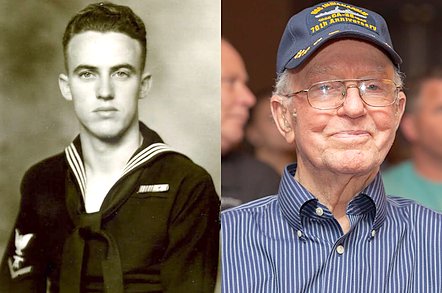
With the passing of Cleatus Lebow in October, 2022, at the age of 98, Benician Harold Bray, Jr., is now the lone living survivor from the legendary USS INDIANAPOLIS. Lebow, raised in Abernathy, Texas, joined the Navy in 1943. He is now 96 years old and the last Sailor left out of the 1,200 crew.


A Sad Day in Navy History: Fire Aboard USS FORRESTAL

by HB Auld, Jr., and Guest Author Tara Ross

Today is a sad day in Navy history.

On this day in 1967, fire broke out aboard USS FORRESTAL (CV 59). My hometown lost one of its own that day. Seaman Ray Chatelaine was killed in that fire.

That is one of the epic disasters in Navy history. Because of that fire, however, training was increased for Sailors, ashore and afloat, that such a tragedy might never happen again. This fire prompted the Navy to revise its firefighting and weapons-handling procedures. There were many heroes that day, but one who stands out was Chief Gerald W. Farrier, the commander of Damage Control Team 8, who was among the first to die in the fire and explosions. The Farrier Fire Fighting School Learning Site in Norfolk, Virginia, was named after this hero.

There are those who will claim that one of the pilots was hot shotting around and accidentally set the fire with his antics and shenanigans. That was never proven and the main thing we must remember are these heroes. They are no less heroes than those who lost their lives in combat in any war. God bless the Sailors and Shipmates of USS FORRESTAL (CV 59) and God bless America.

Historian and author Tara Ross continues with the full story below:

On this day in 1967, a rocket accidentally discharges aboard the flight deck of USS Forrestal. It smashes into a fighter jet piloted by then-Lt. Commander John McCain. Within minutes, the aft end of the aircraft carrier is ablaze.

The incident would result in the worst loss of life aboard a U.S. Navy vessel since World War II.

Forrestal was then the premier ship of its kind. She’d been dispatched to Vietnam, arriving off its coast on July 25. Things went awry just a few days later when she received a problematic shipment of ammunition. It was old and had been poorly maintained, but the Navy was short on ordnance. Old, Korean War-era bombs were now back in circulation.

The ordnance crew was upset, but resigned. Attack waves were already planned. The ordnance would be gone soon.

Except then tragedy struck. At 10:51 on July 29, a pilot in an F-4 Phantom jet was preparing for that day’s second attack wave. As he switched from external power to internal power, he felt a jolt. An unexpected electrical surge had fired one of his Zuni rockets. It tore off the Phantom, zipping across the flight deck and tearing into an A-4 Skyhawk. The pilot of that plane was none other than future Senator (then-LCdr.) John McCain.

The rocket ripped open the Skyhawk’s fuel tank.

Spilled fuel, jet exhaust, and burning rocket propellant did their work: Fuel and planes were soon ablaze. Some pilots were trapped. Others were helped out by their crews. A few, including McCain, pushed their way out of cockpits and jumped. Fuel continued to pour out of planes, worsening an already bad situation.

Firefighting efforts began quickly, which turned out to be unfortunate. The old bombs couldn’t take the heat, as newer bombs can. A mere 1 minute, 34 seconds into the fire, one of them exploded. A fireball shot into the sky, rocking the entire carrier. Most of Forrestal’s specially trained flight-deck firefighters were killed instantly.

Fighting the fire was useless. Bomb after bomb kept exploding as the fuel and fire spread. There was nothing to do but to run for cover. Finally, after five minutes, there was a break. By then, the fire was raging out of control. Holes had been blasted into the flight deck. The scene was so bad and so bloody that some sailors thought Forrestal was under attack.

What else could wreak such havoc?

Admiral Chester W. Nimitz once noted that “uncommon valor was a common virtue” during a World War II battle. The same could be said of the sailors aboard Forrestal that day. Deprived of a firefighting team, they rose to the occasion. Their inexperience led to mistakes—and yet they were heroic!

Remember, the flight deck was full of planes, loaded with ammunition that could still blow. Sailors manually pushed aircraft away from the fire. Other planes, past saving, were pushed into the ocean. Ordnance, too, was pushed overboard. At one point, a sailor loaded a forklift with ammunition, rode it to the edge of the deck, then jumped out just as the forklift fell into the sea.

Some sailors learned to use an Oxygen Breathing Apparatus on the fly so they could fight fires. Throughout it all, of course, sailors were helping their comrades, some of whom were burned beyond recognition. They recognized friends by tattoos or by names stitched onto uniforms.

The main fire was extinguished within an hour, but small fires would continue below deck long afterwards. It had been a deadly sequence: 134 men were dead and hundreds more were wounded. Twenty-one planes were demolished. Forrestal itself had been all but destroyed.

And yet, in many ways, the most remarkable thing about the day was Forrestal’s exceptional crew.

If you enjoy these history posts, please see my note below. 🙂Gentle reminder: History posts are copyright © 2013-2021 by Tara Ross. I appreciate it when you use the shar e feature instead of cutting/pasting.#TDIH#OTD#AmericanHistory#USHistory#liberty#freedom#ShareTheHistory


John S. McCain III: US Senator, US Naval Aviator, and Vietnam Prisoner of War dies at 81


John S. McCain III, senior Republican Senator from Arizona, passed away today from brain cancer. He was 81 years old.

Just yesterday, his family and he announced he had decided to cease taking his medications for the cancer. He must have known then that the end was near.

Senator McCain came from a line of distinguished naval officers. His father and his grandfather were both Admirals in the US Navy. Senator McCain also served in the Navy, flying A-1 Skyraiders on the aircraft carriers USS INTREPID (CV 11) and USS ENTERPRISE (CV 6). Later, he requested a combat assignment and flew A-4 Skyhawks aboard the USS FORRESTAL (CV 59) and USS ORISKANY (CV 34). It was while serving in FORRESTAL that his aircraft was involved in a shipboard fire that resulted in 134 Sailors dying in the fire. He was transferred to ORISKANY soon afterward. It was on October 26, 1967, while flying combat missions as a Lieutenant Commander from ORISKANY that he was shot down over Vietnam, captured, and held as a Prisoner of War. He was ultimately released from imprisonment in North Vietnam after five and a half years on March 14, 1973. He retired from the United States Navy on April 1, 1981, at the rank of Captain after 22 years of service.

Senator McCain was elected to Congress as a Republican US Representative from Arizona in 1983. Senator McCain advanced to serving in the US Senate in January, 1987, after his election in November, 1986. He frequently referred to himself as a “maverick Republican” during his time in the Senate.

He published his memoir, Faith of My Fathers, in August, 1999. He ran against Texas Governor George W. Bush in the Republican primaries, losing to Governor Bush who would go on to win the presidency in 2000. Senator McCain ran again in 2008, as the Republican standard bearer, but lost the presidency to President Barack Obama.

Senator McCain served six terms as the Republican Senator from Arizona. He last cast a vote in the US Senate in December, 2017, after which, he returned to Arizona to continue treatment for brain cancer.

He and his family announced yesterday that he would no longer undergo cancer treatment. He died today, August 25, 2018, at 4:28 p.m. local time, surrounded by his wife, Cindy (Hensley) McCain, and his family.

Rest In Peace, Shipmate. We have the Watch.