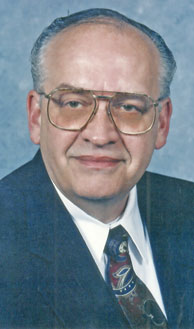
Master Chief Journalist Dennis Stanley Reinke Passes Away

I just learned tonight that retired US Navy Master Chief Journalist Dennis Stanley Reinke passed away a few months ago.  He was 71 years old. Below is Master Chief Reinke’s obituary. RIP, Shipmate.

Dennis Stanley Reinke was born Jan. 4, 1942, in Worthing, S.D., to the late William Stanley Reinke and the late Matie Stroman Reinke. He grew up in Hill City and graduated from Hill City High School in 1960. He attended the South Dakota School of Mines and Technology until he enlisted in the United States Navy in 1961.

During his 26-year career, Reinke served in assignments as a journalist at Naval Air Station Barbers Point, Hawaii, Alameda Naval Station, San Francisco, Calif., was a journalism instructor at the Defense Information School, Fort Benjamin Harrison, Ind., served two tours in Vietnam; public affairs officer at Naval Air Station, Capodochino, Naples, Italy, and manager of the public affairs office at Naval Support Activity, Naples, Italy. He then served as detailer of the journalist and draftsmen communities in the Bureau of Naval Personnel in Washington, D.C. His final assignment was in the Directorate of Freedom of Information and Security Review, Office of the Assistant Secretary of Defense for Public Affairs. Master Chief Reinke retired from the Navy in 1987.

Following his Navy retirement, Reinke served as an operations research specialist in the Department of Defense, offices of the Joint Staff, Directorate of Information Management. He retired from that position in 2000.

Reinke was a member of the Little White Church and regularly attended Immanuel Bible Church (IBC) in Springfield, Va., until he became home bound. He co-managed the Treasure Chest Ministry at the IBC for two years. He also was a member of the Fleet Reserve Association and Naval Order of the United States.

Reinke died Sunday, March 10, 2013, at Potomac Center, Arlington, Va. He was 71.
He is survived by his wife, Sharon, of 43 years; sister, Sharon Paschke; brother-in-law, William Paschke; nephew, Rodney (Julie) Paschke, of Jordan, Mont.; niece Karla Paschke, of Murray lowa,; two grand-nieces; and one grand-nephew.

A committal service with military honors will be held at Arlington National Cemetery at a later date.

Wounded Warrior Project

From a shipmate:

Wounded Warrior Project

Surface Navy Association

GreaterWashington Chapter

For the past two years, the Greater Washington Chapter of the Surface Navy Association has conducted a campaign to assist our wounded shipmates recovering at the National Naval Medical Center in Bethesda, MD.  We collected more than 800 DVDs for the Sailors and Marines to enjoy during their recuperation.  The following year we collected funds and donated 155 portable DVD players.

This year we want to do something very meaningful for those of our shipmates limited in their ability to get out and around the Washington area during their convalescence.  We have determined that Operation Second Chance provides many valuable services to military men and women, and would greatly benefit from a conversion van equipped to transport wheelchair patients in and around the D.C. area to attend sporting events, concerts, and otherwise get out and about.

This is an expensive proposition, but very important for those men and women who are virtually stuck in the hospital.  We have carefully looked at Operation Second Chance and are very impressed with the organization and the services it provides.

Therefore, SNA GWC is seeking to help OSC raise $30,000 to purchase a conversion van modified by Adaptive Mobility Systems, Inc. (AMS Vans).  If interested in making a donation, please commence your contribution at the SNA website:

https://www.navysna.org/Events/OperationSecondChance.asp

After completing the SNA form, you will be directed to the OSC website fundraising page for donations.  (When prompted “How did your hear about OSC?” click on Surface Navy Association.)  Your donation will be made directly to OSC, but we want to track our progress so we can follow our progress to attaining our $30,000 goal.

Our goal is to help OSC raise the $30,000 by December 15th.  If we exceed the $30,000, the additional funds will be available to OSC for insurance, registration, maintenance and operating costs for the van.

Please share this appeal with others who share our concern for those shipmates who had made a very great sacrifice in service to their nation and security and freedom everywhere.

For information about SNA, visit  www.navysna.org

For information about OSC, visit http://www.operationsecondchance.org/About.htm

It Happened On This Date (More or Less)

August 15

1845 – U.S. Naval Academy established at Annapolis, MD on former
site of Fort Severn,

1895 – Commissioning of Texas, the first American steel-hulled
battleship. Texas served off Cuba during the
Spanish-American War and took part in the naval battle of
Santiago. Under the name of San Marcos, she was sunk in
weapon effects tests in Chesapeake Bay in 1911. Her hulk
continued in use as a gunnery target through World War II.

1908 – First Navy post offices established in Navy ships.

1944 – Operation Dragoon, Allied invasion of Southern France.

1953 – First naval officer appointed Chairman, Joints Chiefs of Staff,
Admiral William Radford. He served from 15 August 1953
until 15 August 1957.

1958 – USS Lexington (CVA-16) arrives in vicinity of Taiwan.

It Happened On This Date (More or Less)

August 12

1812 – USS Constitution captures and destroys brig Adeona.

1918 – SECNAV approves acceptance of women as yeoman (F) in
U.S. Navy.

1942 – USS Cleveland (CL-55) demonstrates effectiveness of radio-proximity fuze (VT-fuze) against aircraft by successfullydestroying 3 drones with proximity bursts fired by her five inch guns.

1944 – LT Joseph P. Kennedy, Jr., USNR, the older brother of
John F. Kennedy, was killed with his co-pilot in a mid-air
explosion after taking off from England in a PB4Y from
Special Attack Unit One (SAU-1). Following manual takeoff,
they were supposed to parachute out over the English Channel
while the radio-controlled explosive filled drone proceeded to
attack a German V-2 missile-launching site. Possible causes
include faulty wiring or FM signals from a nearby transmitter.

1957 – In first test of Automatic Carrier Landing System, LCDR Don
Walker is landed on USS Antietam.

1958 – USS Nautilus (SSN-571) arrives Portland, England completing
first submerged under ice cruise from Pacific to Atlantic
Oceans.

Navy Shoots Down Ballistic Missile in Test Off Hawaii

HONOLULU (AP–From FoxNews) — The U.S. military intercepted a ballistic missile Thursday in the first such sea-based test since a Navy cruiser shot down an errant satellite earlier this year.

The military fired the target, a Scud-like missile with a range of a few hundred miles, from a decommissioned amphibious assault ship near Hawaii’s island of Kauai.

The USS Lake Erie, based at Pearl Harbor, fired two interceptor missiles that shot down the target in its final seconds of flight about 12 miles above the Pacific Ocean.

Read Full Story Here>>

US Navy Successfully Shoots Down US Spy Satellite

WASHINGTON — A missile launched from a Navy ship successfully struck a dying U.S. spy satellite passing 130 miles over the Pacific on Wednesday, a defense official said. Full details were not immediately available.

It happened just after 10:30 p.m. EST.

Two officials said the missile was launched successfully. One official, who is close to the process, said it hit the target. He said details on the results were not immediately known.

The goal in this first-of-its-kind mission for the Navy was not just to hit the satellite but to obliterate a tank aboard the spacecraft carrying 1,000 pounds of a toxic fuel called hydrazine.

U.S. officials have said the fuel would pose a potential health hazard to humans if it landed in a populated area. Although the odds of that were small even if the Pentagon had chosen not to try to shoot down the satellite, it was determined that it was worth trying to eliminate even that small chance.

Officials said it might take a day or longer to know for sure if the toxic fuel was blown up.

(Story From FoxNews)

US Navy 232 Years Old Today!

On Friday, October 13, 1775, meeting in Philadelphia, the Continental Congress voted to fit out two sailing vessels, armed with ten carriage guns, as well as swivel guns, and manned by crews of eighty, and to send them out on a cruise of three months to intercept transports carrying munitions and stores to the British army in America. This was the original legislation out of which the Continental Navy grew and as such constitutes the birth certificate of the navy.

To understand the momentous significance of the decision to send two armed vessels to sea under the authority of the Continental Congress, we need to review the strategic situation in which it was made and to consider the political struggle that lay behind it.

Americans first took up arms in the spring of 1775 not to sever their relationship with the king, but to defend their rights within the British Empire. By the autumn of 1775, the British North American colonies from Maine to Georgia were in open rebellion. Royal governments had been thrust out of many colonial capitals and revolutionary governments put in their places. The Continental Congress had assumed some of the responsibilities of a central government for the colonies, created a Continental Army, issued paper money for the support of the troops, and formed a committee to negotiate with foreign countries. Continental forces captured Fort Ticonderoga on Lake Champlain and launched an invasion of Canada.

In October 1775 the British held superiority at sea, from which they threatened to stop up the colonies’ trade and to wreak destruction on seaside settlements. In response a few of the states had commissioned small fleets of their own for defense of local waters. Congress had not yet authorized privateering. Some in Congress worried about pushing the armed struggle too far, hoping that reconciliation with the mother country was still possible.

Yet, a small coterie of men in Congress had been advocating a Continental Navy from the outset of armed hostilities. Foremost among these men was John Adams, of Massachusetts. For months, he and a few others had been agitating in Congress for the establishment of an American fleet. They argued that a fleet would defend the seacoast towns, protect vital trade, retaliate against British raiders, and make it possible to seek out among neutral nations of the world the arms and stores that would make resistance possible.

Still, the establishment of a navy seemed too bold a move for some of the timid men in Congress. Some southerners agreed that a fleet would protect and secure the trade of New England but denied that it would that of the southern colonies. Most of the delegates did not consider the break with England as final and feared that a navy implied sovereignty and independence. Others thought a navy a hasty and foolish challenge to the mightiest fleet the world had seen. The most the pro-navy men could do was to get Congress to urge each colony to fit out armed vessels for the protection of their coasts and harbors.

Then, on 3 October, Rhode Island’s delegates laid before Congress a bold resolution for the building and equipping of an American fleet, as soon as possible. When the motion came to the floor for debate, Samuel Chase, of Maryland, attacked it, saying it was “the maddest Idea in the World to think of building an American Fleet.” Even pro-navy members found the proposal too vague. It lacked specifics and no one could tell how much it would cost.

If Congress was yet unwilling to embrace the idea of establishing a navy as a permanent measure, it could be tempted by short-term opportunities. Fortuitously, on 5 October, Congress received intelligence of two English brigs, unarmed and without convoy, laden with munitions, leaving England bound for Quebec. Congress immediately appointed a committee to consider how to take advantage of this opportunity. Its members were all New Englanders and all ardent supporters of a navy. They recommended first that the governments of Massachusetts, Rhode Island, and Connecticut be asked to dispatch armed vessels to lay in wait to intercept the munitions ships; next they outlined a plan for the equipping by Congress of two armed vessels to cruise to the eastward to intercept any ships bearing supplies to the British army. Congress let this plan lie on the table until 13 October, when another fortuitous event occurred in favor of the naval movement. A letter from General Washington was read in Congress in which he reported that he had taken under his command, at Continental expense, three schooners to cruise off Massachusetts to intercept enemy supply ships. The commander in chief had preempted members of Congress reluctant to take the first step of fitting out warships under Continental authority. Since they already had armed vessels cruising in their name, it was not such a big step to approve two more. The committee’s proposal, now appearing eminently reasonable to the reluctant members, was adopted.

The Continental Navy grew into an important force. Within a few days, Congress established a Naval Committee charged with equipping a fleet. This committee directed the purchasing, outfitting, manning, and operations of the first ships of the new navy, drafted subsequent naval legislation, and prepared rules and regulations to govern the Continental Navy’s conduct and internal administration.

Over the course of the War of Independence, the Continental Navy sent to sea more than fifty armed vessels of various types. The navy’s squadrons and cruisers seized enemy supplies and carried correspondence and diplomats to Europe, returning with needed munitions. They took nearly 200 British vessels as prizes, some off the British Isles themselves, contributing to the demoralization of the enemy and forcing the British to divert warships to protect convoys and trade routes. In addition, the navy provoked diplomatic crises that helped bring France into the war against Great Britain. The Continental Navy began the proud tradition carried on today by our United States Navy, and whose birthday we celebrate each year in October.

Forty Years Ago Today: October 2, 1967

On 2 October 1967 in a solemn, traditional Navy ceremony with full military honors, eighteen unidentified and or missing USS FORRESTAL CVA-59 crew members who died on 29 July 1967 are honored today at Arlington National Cemetery.

It was the largest group burial in Arlington National Cemetery since World War II, Superintendent John C. Metzler said.

Catholic Mass and Protestant Services began at 0900 in the Fort Myer North Post Chapel, Arlington National Cemetery, Arlington, Virginia. Gravesite rites beside eight flag-draped caskets containing the remains of the men followed.

About 500 persons, many of them widows, mothers and fathers of the dead, 100 of them sailors from the FORRESTAL attended the mournful ceremonies.

Also attending were Navy Secretary Paul R. Ignatius, the Chief of Naval Operations Admiral Thomas H. Moore, and FORRESTAL’s Captain and Mrs. John K. Beling.

The requiem mass said in the chapel this morning was for five of the group. Then two Protestant chaplains conducted a service for the remaining 13.

In the latter service, USS FORRESTAL’s Chaplain David Cooper referred to the dead as, “these patriots, these, our shipmates, your sons, husbands, friends, and brothers.” “One of them played the organ at our daily service, he added. They all answered the call of America.”

After the chapel services, the symbolic casket was carrier to the graveside on the old artillery caisson drawn by six black horses. Behind the caisson marched the Navy band and a Navy honor guard.

At the graves, the Catholic and Protestant chaplains took turns delivering final prayers over the dead. Navy escort officers assigned to accompany each mourning family presented them with an American flag folded in the tri-cornered shape symbolic of the American Revolution. In addition to the chaplains, Secretary Ignatius, Admiral Moore, and Captain Beling filed by the rows of folding chairs to say a word of comfort to each family.

After the gravesite ceremony, the rifle squad fired a volley and Taps were played. Upon the completion of Taps the band played “America.” The Families Naval escort presented each Family unit with a folded Flag. The Ceremonial Detail followed by the marching FORRESTAL contingent departed the gravesite.

When the ceremony was over, the dignitaries, the chaplains, and the rifle squad left. However, the relatives and men from the FORRESTAL stayed behind briefly in silence before they also began to disperse.

From the Commanding Officer, USS KITTY HAWK (CV-63):

Folks,

Had a unique opportunity to surprise the crew the other day. Made a little jog in navigation and was able to pass directly over the final resting place of USS LEXINGTON, CV-2. We passed over at almost exactly the time of day that she was hit by the first torpedo in May
19 42 and the weather was exactly the same. That part was a coincidence, but making the conscious decision a couple days ago to CPA her resting place was not.

I personally read, over the 1MC, from CAPT Sherman’s after action report. Chaps then said a prayer (attached), we played echo Taps and two sailors laid flowers from the fantail.

Didn’t tell almost anyone what we were doing ahead of time. During weekly training GQ last night the XO and CHE read aloud from the Chief Engineer’s after action report lessons learned. You cannot believe how appreciative the crew has been for all of this. It actually made me feel pretty good.
The Prayer

26 JULY 2007
TRANSITING THE AREA OF THE BATTLE OF THE CORAL SEA
LET US PRAY. ALMIGHTY AND ETERNAL GOD, THE MYSTIC BEAUTY OF THE SEA SEEMS TO RISE IN BENEDICTION TO YOU. AS WE PASS OVER THESE HALLOWED WATERS WHERE 65 YEARS AGO, THE USS LEXINGTON WAS LOST IN THE BATTLE OF THE CORAL SEA, IT IS ONLY RIGHT THAT WE STOP AND PAUSE FOR A MOMENT TO REMEMBER THE MOMENTOUS SACRIFICE OF OUR ELDER SHIPMATES. FROM THEM, WE LEARN THE HIGHEST IDEALS OF THE WARRIOR SPIRIT: SELF-SACRIFICE, MISSION ACCOMPLISHMENT, TENACITY.
IN THE DOGGED FIVE-DAY BATTLE THAT CHANGED THE COURSE OF WORLD WAR II, SAILORS FROM ACROSS AMERICA AND FROM EVERY WALK OF LIFE, BANDED TOGETHER WITH A COMMON FOCUS OF DEFEATING A FORMIDABLE ENEMY.
LORD GOD, WE REMEMBER THOSE WHO FOUGHT AND PERISHED HERE. WE ARE THANKFUL FOR THEIR LIVES EVEN AS WE ARE WE ARE INSPIRED BY THEIR MONUMENTAL ACHIEVEMENT. WE ARE THANKFUL FOR THE OPPORTUNITY THAT WE HAVE TO SERVE IN OUR NATION S DEFENSE AND TO CARRY ON THESE HIGH IDEALS. WE ASK THAT YOU WILL WALK WITH US TO REMIND US THAT THE TRADITION WE INHERIT DOES NOT BELONG TO US INDIVIDUALLY, BUT IS A SACRED TRUST GIVEN TO US BY THOSE UPON WHOSE SHOULDERS WE STAND.
AS TAPS IS PLAYED FOR THE FAITHFUL DEPARTED WHO IN THIS PLACE FOUGHT AND DIED SO MANY YEARS AGO, WE OFFER YOU OUR MOST HUMBLE PRAYER. MAY THEIR SOULS, AND THE SOULS OF ALL WHO HAVE GIVEN THEIR LIVES FOR FREEDOM’S CAUSE, THROUGH THE MERCY OF GOD, REST IN PEACE. AMEN.

USS Forrestal (CVA-59) Fire Remembered

Remembering USS Forrestal — 40 Years Later

By Mass Communication Specialist 3rd Class David Wyscaver, Fleet Public Affairs Center, Atlantic

NORFOLK (NNS) — The Farrier Firefighting School Learning Site (FFSLS), part of Naval Station Norfolk, commemorated the 40th anniversary of the devastating events on board aircraft carrier USS Forrestal (CVA 59) in a ceremony July 27.

Former Forrestal crew members, surviving family members and instructors from the fire fighting school attended the ceremony.

“My earliest memories of fire fighting training on the dangers of fire at sea center around the fire aboard USS Forrestal and our lessons learned from that day,” said Chief Warrant Officer 4 Robert E. Sutler, department head at FFSLS.

On July 29, 1967, while operating off the coast of Vietnam in the Tonkin Gulf, an accidental firing of a Zuni rocket from an F-4 Phantom struck an armed A-4 Skyhawk causing one of the worst losses of life in naval history. One hundred thirty-four crew members lost their lives and 67 were seriously injured. The damage to Forrestal totaled more than $70 million.

Lou Braasch, a Forrestal survivor, read the names and rang a single toll in memory of each individual Sailor who sacrificed their lives battling the blaze that erupted aboard.

The accidental launch and substantial impact caused a fuel tank and 1,000-pound bomb on the Skyhawk to fall off, leading to a fuel-powered fire on the flight deck. The following minutes would contain sights of burning aircraft, spreading fires and massive holes in the steel foundation of the vessel.

Retired Capt. Tommy C. Wimberly, former Forrestal crew member, explained, “about a minute to a minute-and-a- half after the fire started, the first bomb detonated. It’s difficult to describe what the detonation of those bombs felt like, it was a severe shock.”

In the midst of all of the chaos, Chief Aviation Boatswain’s Mate (Handler) Gerald W. Farrier, armed with only a portable fire extinguisher, fought the fires to the best of his ability until a bomb exploded, taking his life.

To help honor Farrier’s efforts and those of his shipmates, the Farrier Firefighting School is named in his honor and serves as one of the top facilities for training service members in critical firefighting areas.

“Here at this magnificent facility are taught many of the lessons learned from the events in the tragic aircraft carrier fires of the Vietnam era,” Wimberly added.

One former crew member that survived the horrific experience noted the impact of Forrestal.

“They made the supreme sacrifice and the least we can do is gather together annually and honor their bravery. A lot of us were close to the fire that day and it’s something I will never forget,” said Bradford Jones.

As the ceremony concluded, a few individuals took time to reflect on the past while looking forward to the future of the Navy in terms of firefighting.

“I hope that places like this, [The Farrier Firefighting School], will save a lot of lives and prepare a lot of people to helps themselves and help others to survive and fight another day,” said Jones.